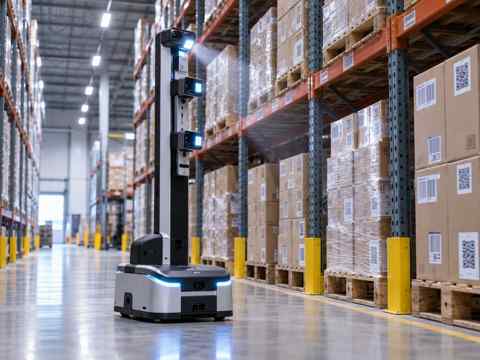
VISIBILITY
Inventory Scanning
Run repeatable aisle missions for selected inventory visibility and inspection workflows.
Combine cargo unloading, autonomous inventory scanning, mobile manipulation and project-configured material movement around the actual warehouse process.
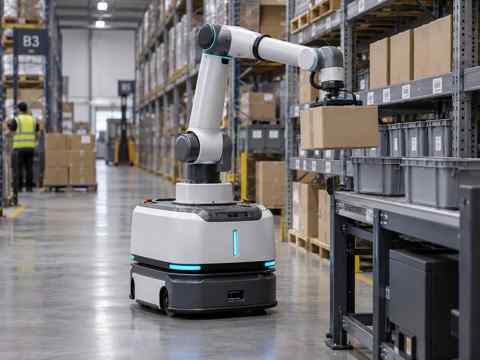
Warehouse robotics works when the material, presentation, route, workpoint, safety boundary and system interface are understood before platform selection.
Start with repeatable work, clear hand-off points and measurable operating constraints, then select the robot or AI layer that fits the job.
Run repeatable aisle missions for selected inventory visibility and inspection workflows.
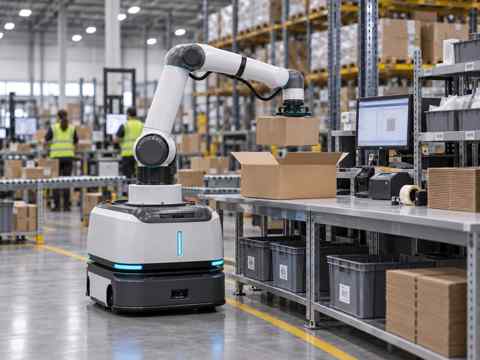
Evaluate AMR-style movement between receiving, staging, storage and compatible workpoints.
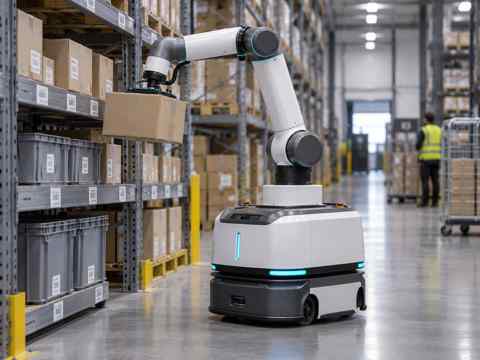
Use mobile manipulation for selected cartons, bins, totes and workstation handling tasks.
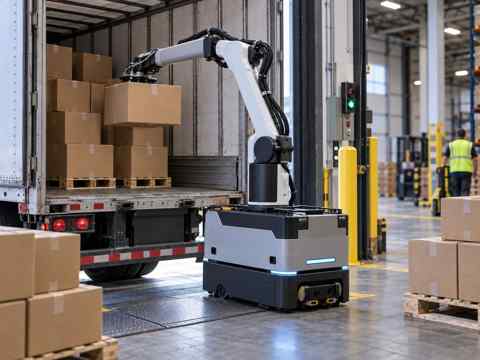
Automate selected truck, container and dock-side unloading workflows after material validation.
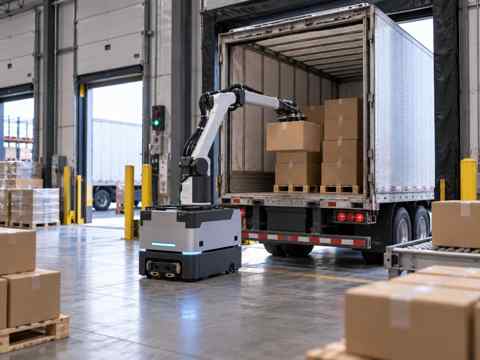
Scanning, unloading and manipulation are different engineering problems. RIFE keeps them as separate robot families and combines them only where the process benefits.
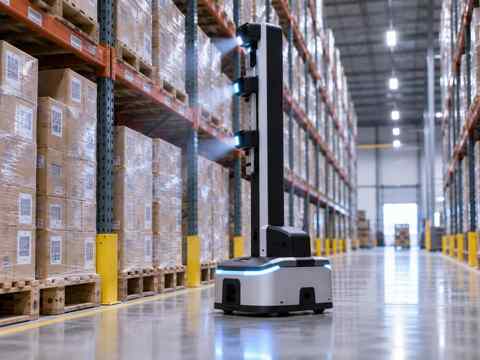
Multi-robot environments need mapped routes, mission ownership, charging rules, priority logic and interfaces to warehouse systems where approved.
Identify the highest-volume unloading, scanning, movement or picking bottleneck.
Review material, geometry, routes, throughput and workpoints.
Select robot family, missions, safety boundaries and required interfaces.
Test the real process, exceptions and operator hand-offs before go-live.
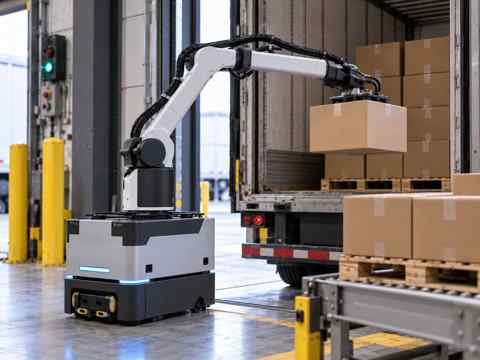
Selected unloading and staging workflows.
Autonomous scanning and inspection missions.
Selected mobile manipulation around defined pickup points.
Defined material movement to compatible workpoints.
Exact platform, software, payload, integration, permissions and operating boundaries are confirmed only after site and workflow review.
The established family includes cargo unloading, autonomous inventory scanning and mobile manipulation, with other material-movement workflows evaluated project by project.
Possible integrations are reviewed against the target system, available interface, permissions and required workflow.
Multi-robot coordination depends on the selected platforms and fleet architecture and must be confirmed during technical review.
Start with a repetitive, measurable process that has clear pickup, destination and exception rules.
Share the operating environment, routes, workpoints, payloads, visitor journeys and systems involved. RIFE can map the requirement to the appropriate robot and AI solution mix.