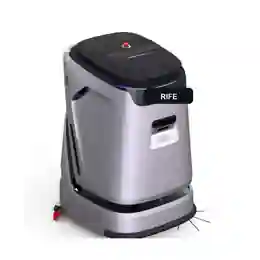
CLEANING
Autonomous Cleaning
Automate suitable scheduled floor-cleaning routes across defined facility zones.
Use autonomous cleaning, internal delivery and managed fleet workflows to reduce repetitive facility work across offices, campuses, hospitals and commercial properties.
Cleaning, delivery and service robots need route ownership, schedules, charging, exception handling and building interfaces that fit the facility team’s daily operating process.
Start with repeatable work, clear hand-off points and measurable operating constraints, then select the robot or AI layer that fits the job.
Automate suitable scheduled floor-cleaning routes across defined facility zones.
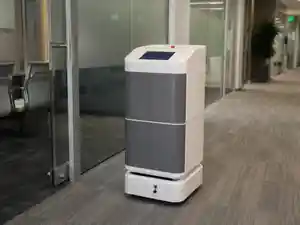
Move selected supplies, documents or service items between approved facility points.
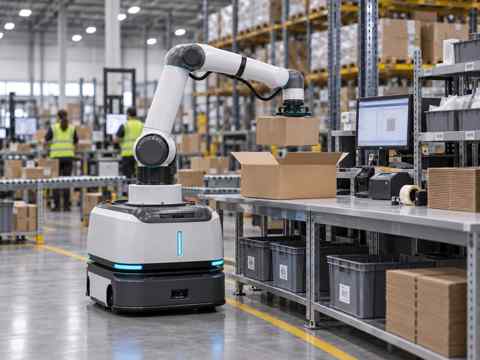
Coordinate missions, priorities, charging and exception ownership where multiple robots operate.
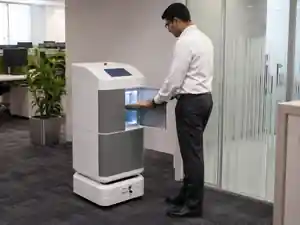
Review doors, access, lifts and facility software as explicit integration workstreams.
Facilities teams often gain the clearest value from repetitive floor care and point-to-point service movement before adding more complex integration.
A production deployment needs named owners for robot missions, exceptions, support, route changes and any external building-system interfaces.
Measure cleaning, courier and facility-service workloads.
Map routes, floors, doors, lifts and operating windows.
Define missions, priority, charging and exception ownership.
Review performance and control environment changes over time.
Cleaning and parcel/service movement.
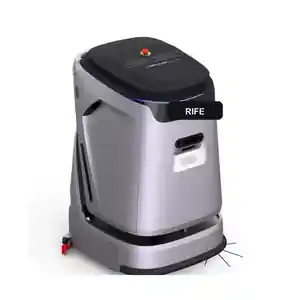
Selected cleaning and logistics support.

Scheduled cleaning and internal service routes.
Delivery, reception and building integration.
Exact platform, software, payload, integration, permissions and operating boundaries are confirmed only after site and workflow review.
Repetitive cleaning and point-to-point internal movement are often strong starting points when routes and operating windows are stable.
Multi-robot management depends on the selected fleet platforms and should be scoped around mission ownership and technical compatibility.
Potential integration must be verified against the exact building systems and approved interfaces.
Use workflow measures such as completed missions, coverage, exceptions, manual interventions and service availability rather than generic robot activity.
Share the operating environment, routes, workpoints, payloads, visitor journeys and systems involved. RIFE can map the requirement to the appropriate robot and AI solution mix.