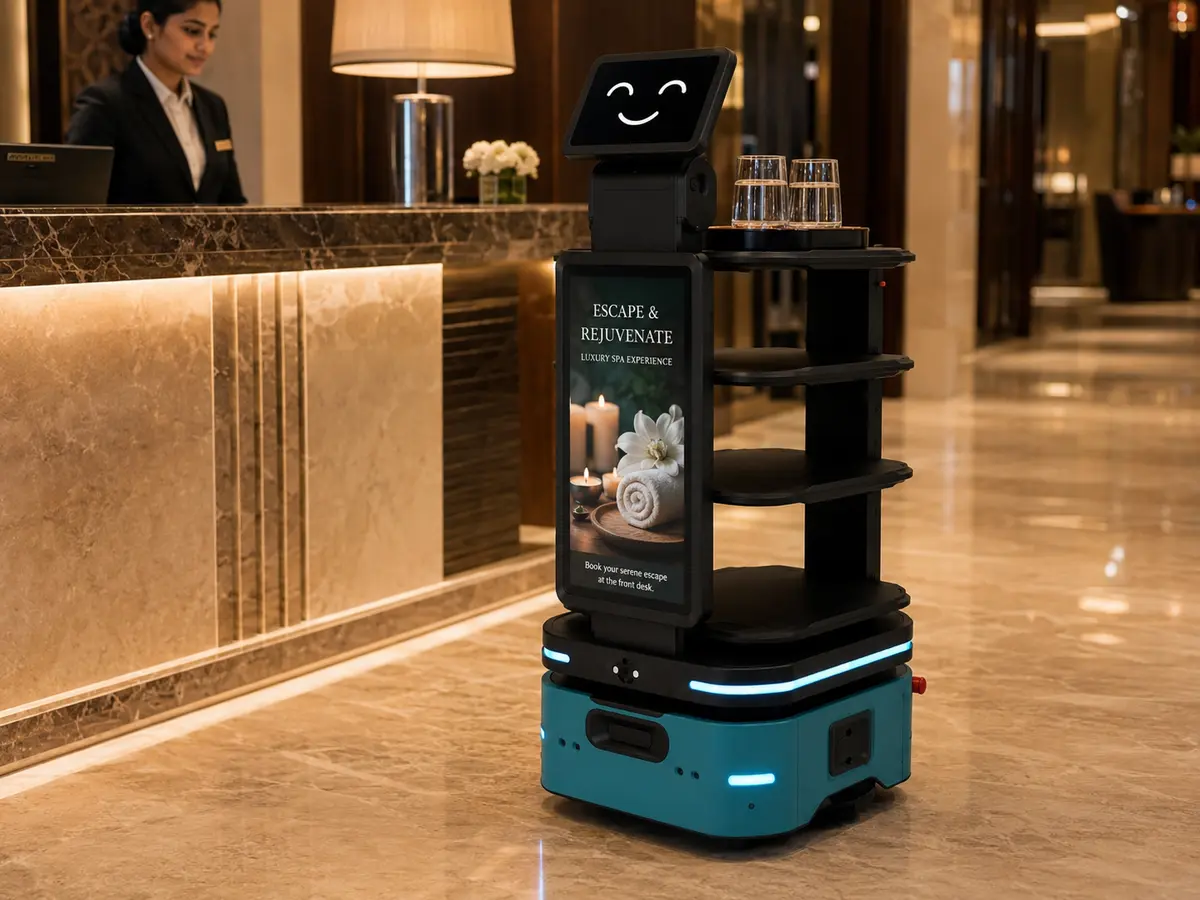
FOOD RUNNING
Kitchen to Service Point
Move approved food or service items from kitchen or pickup areas to defined service points.
A food delivery robot can support repeatable restaurant journeys between kitchen pickup points, service stations and approved table-area destinations. The best restaurant service robot deployment is designed around staff workflow, aisle space, guest traffic and hand-off rules.
A food delivery robot can support repeatable restaurant journeys between kitchen pickup points, service stations and approved table-area destinations. The best restaurant service robot deployment is designed around staff workflow, aisle space, guest traffic and hand-off rules.
Use the robot only where the route, payload, hand-off and operating environment are clearly defined.
Move approved food or service items from kitchen or pickup areas to defined service points.
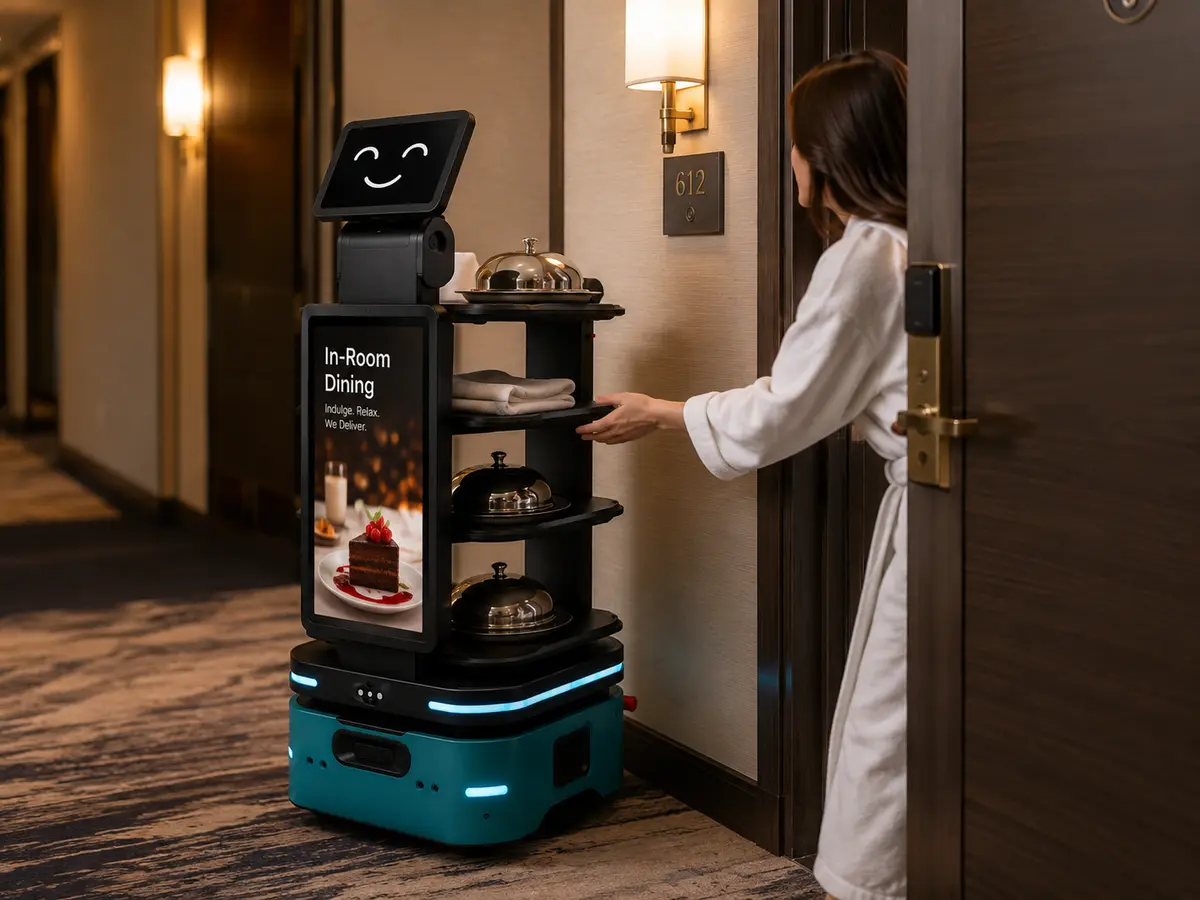
Support selected service journeys in suitable dining layouts while staff retain hospitality and exception handling.
Move trays or approved items in structured cafeteria and corporate-canteen environments.
Use the same indoor delivery platform for selected food, amenity and hospitality workflows.
The robot configuration is selected around the application, payload, route, destination and hand-off process rather than a generic one-size-fits-all setup.
Restaurant environments can be crowded and change quickly. A site review should test aisle width, turns, thresholds, peak guest traffic, pickup height, table layout, charging location and staff intervention points.
Identify approved food and service payloads, pickup points and hand-off locations.
Review kitchen routes, aisle widths, turns, guest traffic and charging location.
Select the robot, tray or hand-off format and operating rules.
Commission the approved indoor service missions and staff intervention process.
Selected kitchen-to-service-point food-running workflows.
Defined pickup-to-service movement in suitable layouts.
Repeatable indoor food or tray movement.
Selected food and amenity delivery workflows.
Dimensions, payload, battery profile, navigation, end-effector, authentication, software interfaces and building integrations are not assumed. They are confirmed for the selected model and approved project scope.
Selected table-area delivery workflows can be evaluated where the layout, hand-off method and guest-traffic conditions are suitable.
Yes. Structured cafeterias and corporate canteens can be strong candidates for repeatable indoor delivery missions.
The stronger operating model is usually to automate selected repetitive movement while staff continue to manage hospitality, service quality, judgement and exceptions.
The Premium Delivery Robot is the primary guest-facing platform, with the final configuration selected after site and workflow review.
Share the site, payload, route, pickup and destination points, operating hours and any required system interfaces. RIFE Robotics will review the workflow before confirming the configuration.