Is Your Campus Ready for a Delivery Robot?
A campus delivery robot needs more than a clear corridor. The institution should validate buildings, route continuity, doorways, lifts, charging, connectivity, pedestrian traffic, hand-off and operating ownership before deployment.
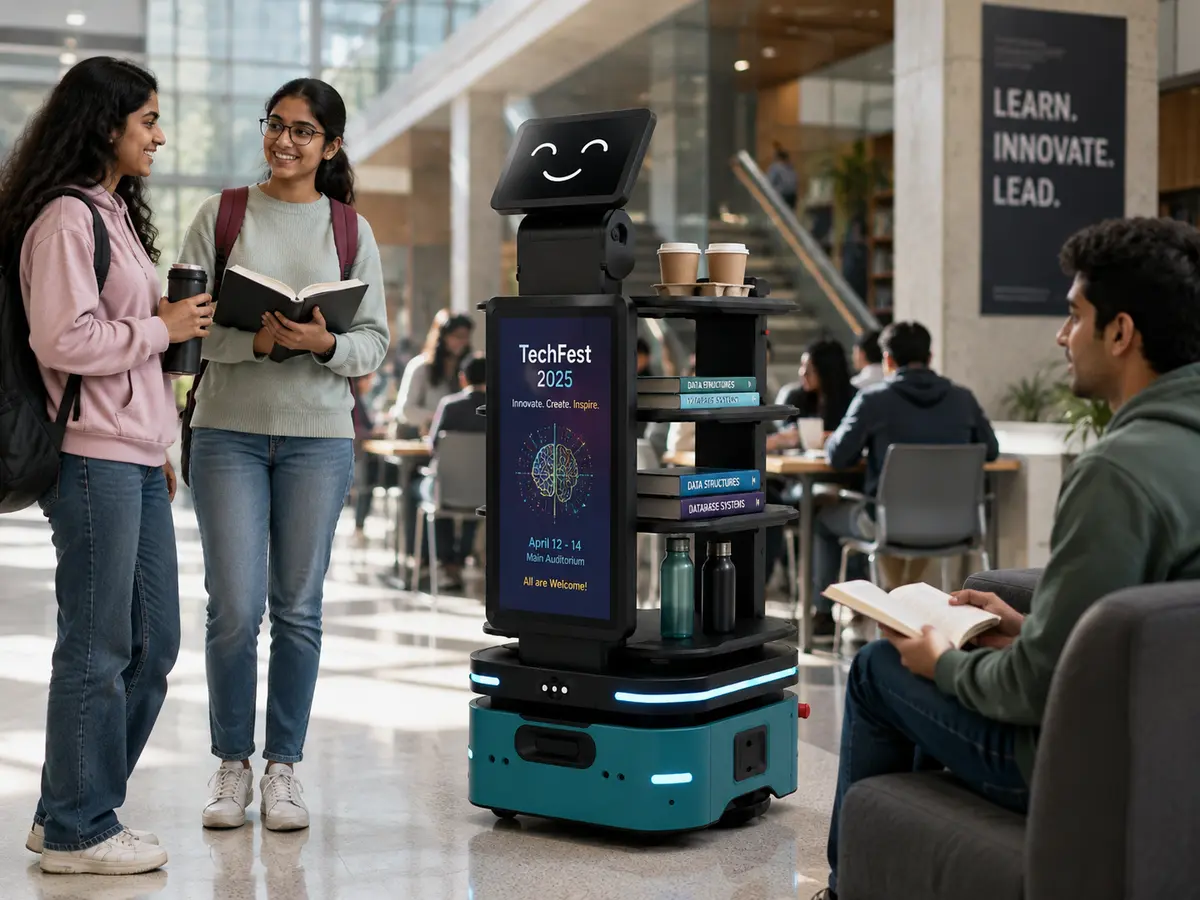
Can the robot traverse the actual campus route?
Check corridor width, turns, thresholds, doors, ramps, lifts, pedestrian density and any outdoor transitions.
Review the route during realistic student and staff traffic.
Is the route fully indoor, covered or exposed?
Outdoor operation should be validated separately for weather, surfaces, crossings and the selected robot platform.
Do not assume an indoor configuration can use unrestricted outdoor campus roads.
How will departments or staff receive items?
Define the exact destination, recipient, collection method and exception process.
Any authentication or secure-custody requirement should be specified explicitly for the approved project.
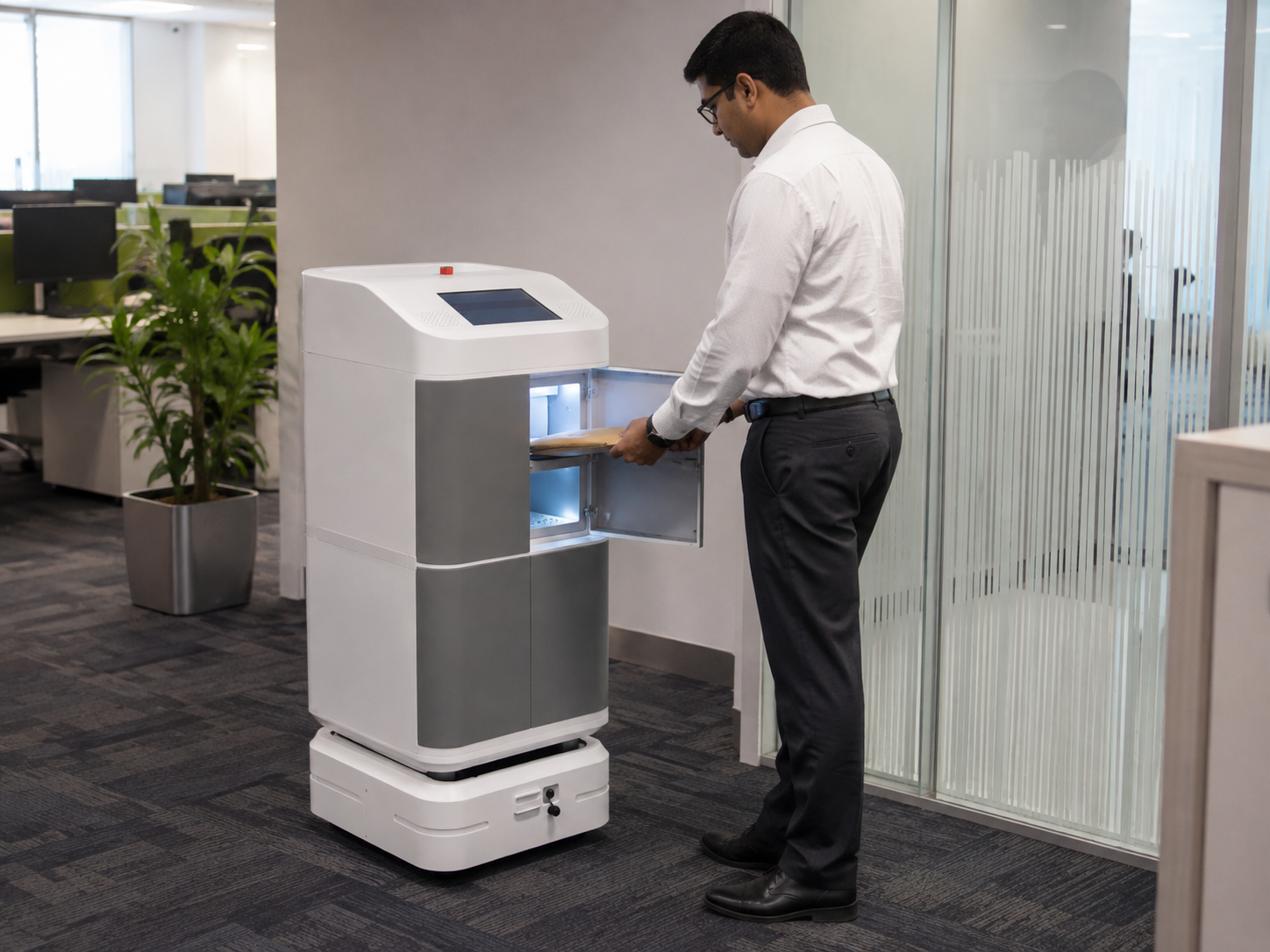
Are charging and connectivity planned?
Define parking and charging location, network coverage where required and the operating window for missions.
Exact connectivity requirements depend on the selected platform and integration scope.
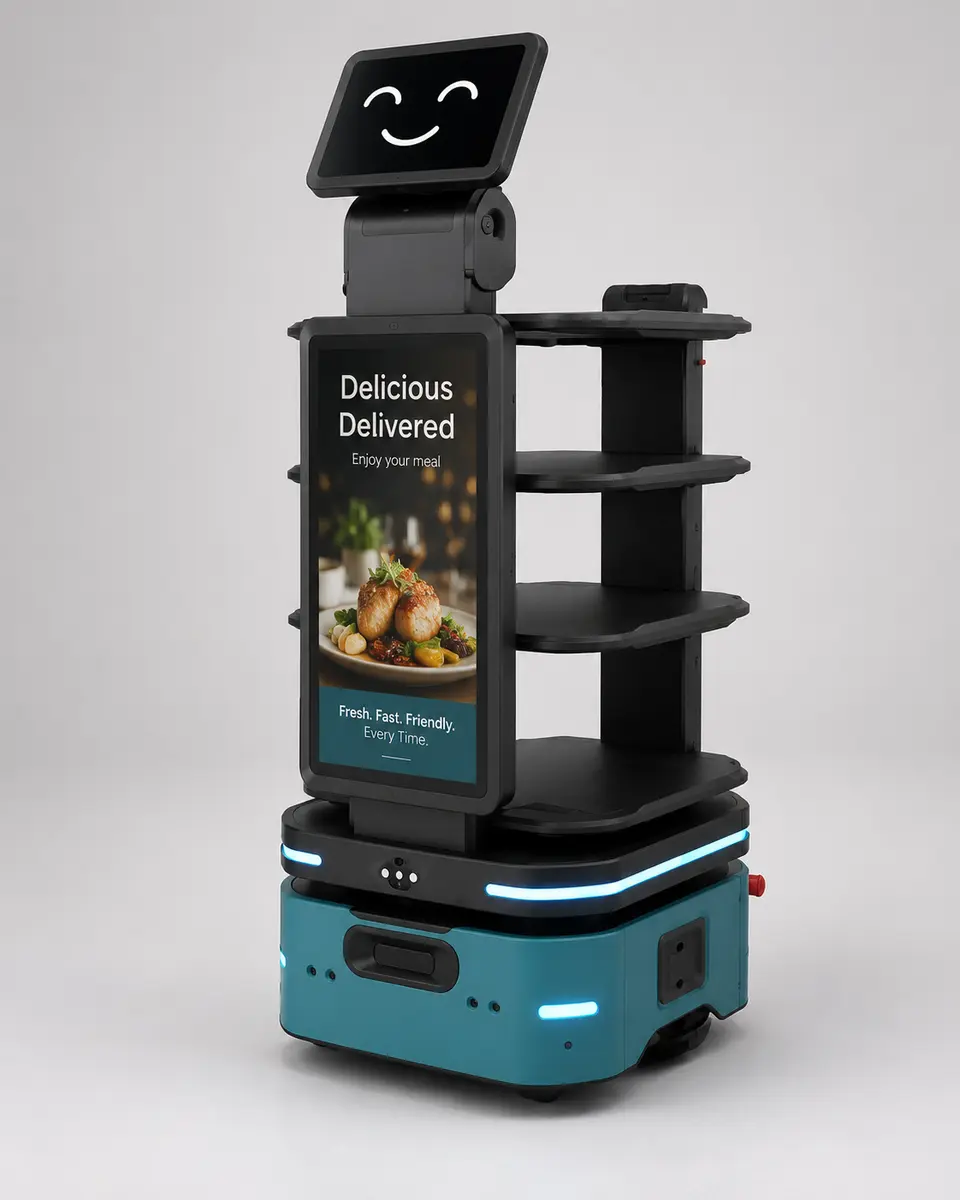
Who owns daily robot operation?
Assign responsibility for missions, loading, exceptions, charging, route changes and support escalation.
Autonomous movement still needs a named campus operating owner.
Frequently asked questions
Do we need a site survey?
A site review is strongly recommended where buildings, lifts, thresholds, outdoor transitions or pedestrian traffic could affect deployment.
Can a robot move between multiple campus buildings?
Potentially, but route continuity, outdoor exposure, access conditions and the selected robot must be reviewed.
What information should be ready before the survey?
Prepare intended items, pickup and destination points, buildings, floors, route constraints, daily mission volume and responsible departments.