Which Food-Service Workflows Suit a Service Robot?
Restaurant robots are best used for defined transport and service-support tasks. The right use case has a repeatable pickup point, suitable items, a clear destination and a route the robot can reliably traverse.
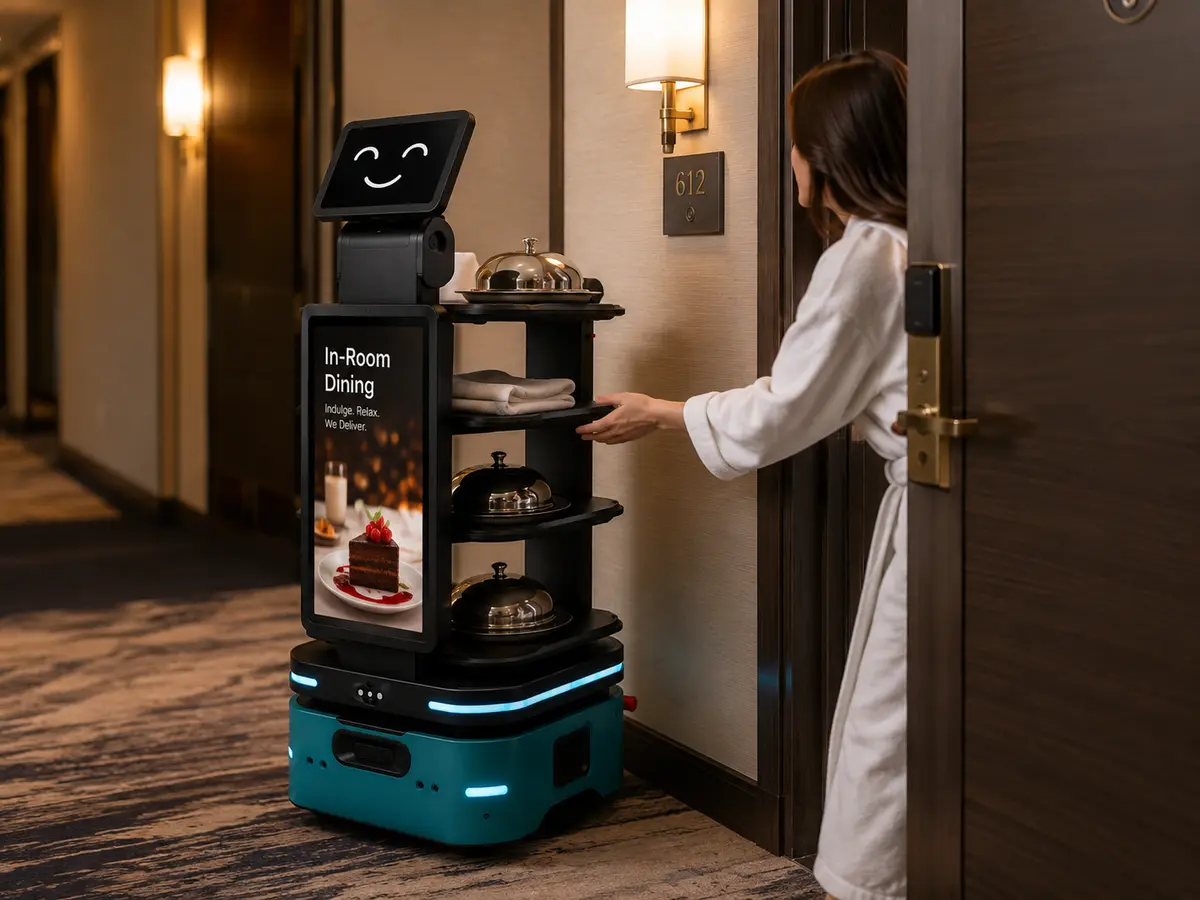
Kitchen-to-floor food running
A robot can support suitable movement from kitchen or pass to designated service points or dining zones.
Staff remain responsible for food presentation, service quality and exceptions.
Table-area service support
Selected table-area delivery can be evaluated where aisle space, guest traffic and hand-off are appropriate.
The exact table interaction should be designed for the restaurant model rather than assumed.
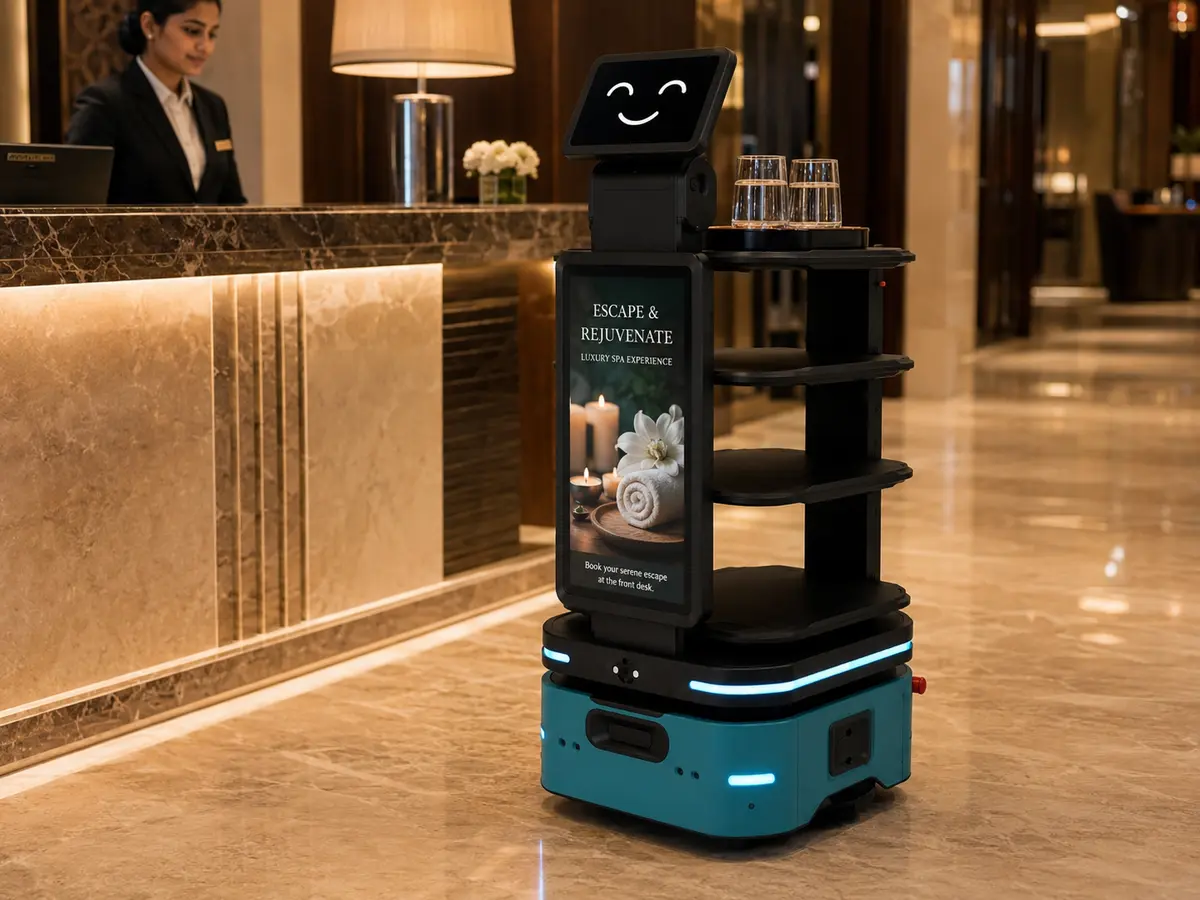
Structured food-service environments
Corporate canteens, cafeterias and food courts can be suitable for repeatable tray or service-item movement between defined points.
Structured layouts often make route definition easier.
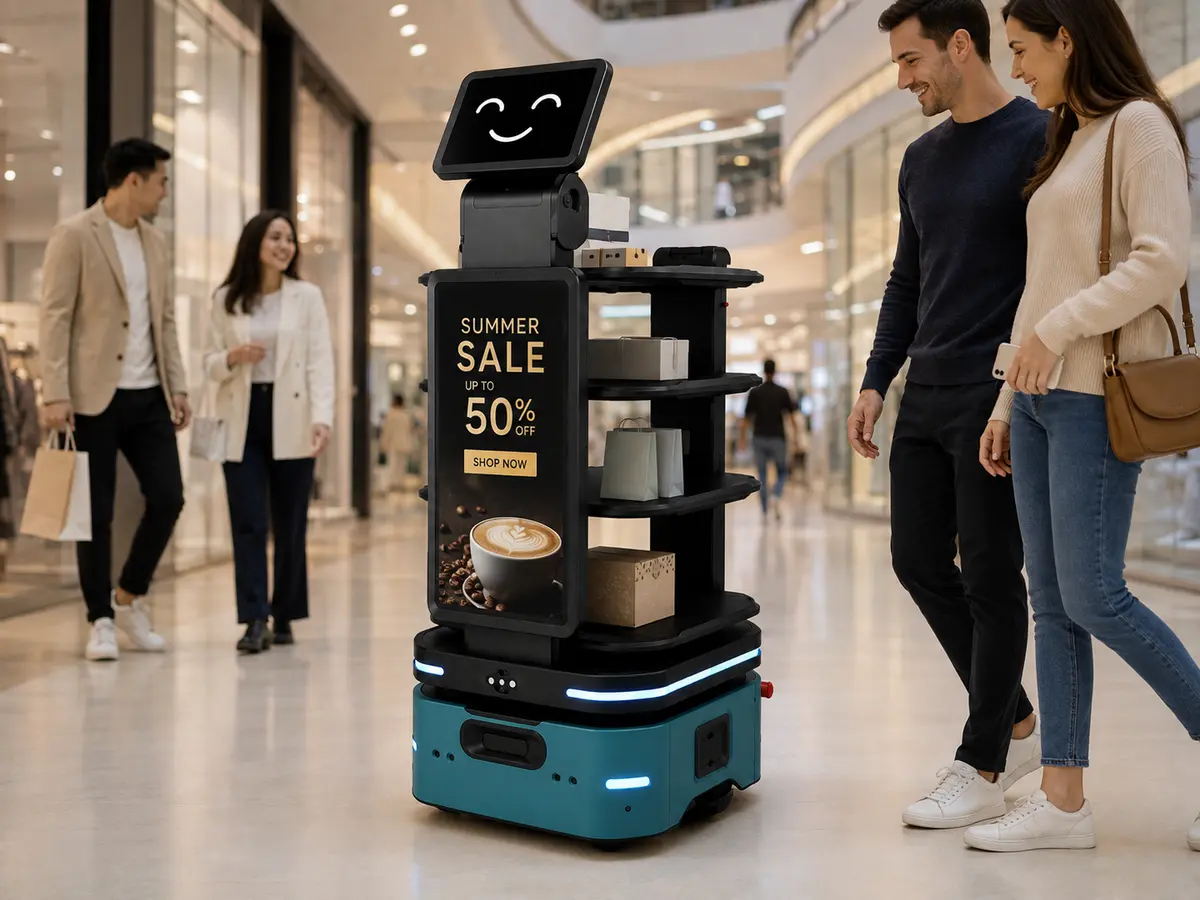
Selected dish-return journeys
Dish or tray return can be evaluated where item stability, collection points and traffic conditions are suitable.
The return process should have a clear staff hand-off and cleaning procedure.
Choose the robot around the real mission
Tray format, payload, guest-facing presentation, route and operating window should determine the selected configuration.
Exact product specifications should be confirmed for the approved project.
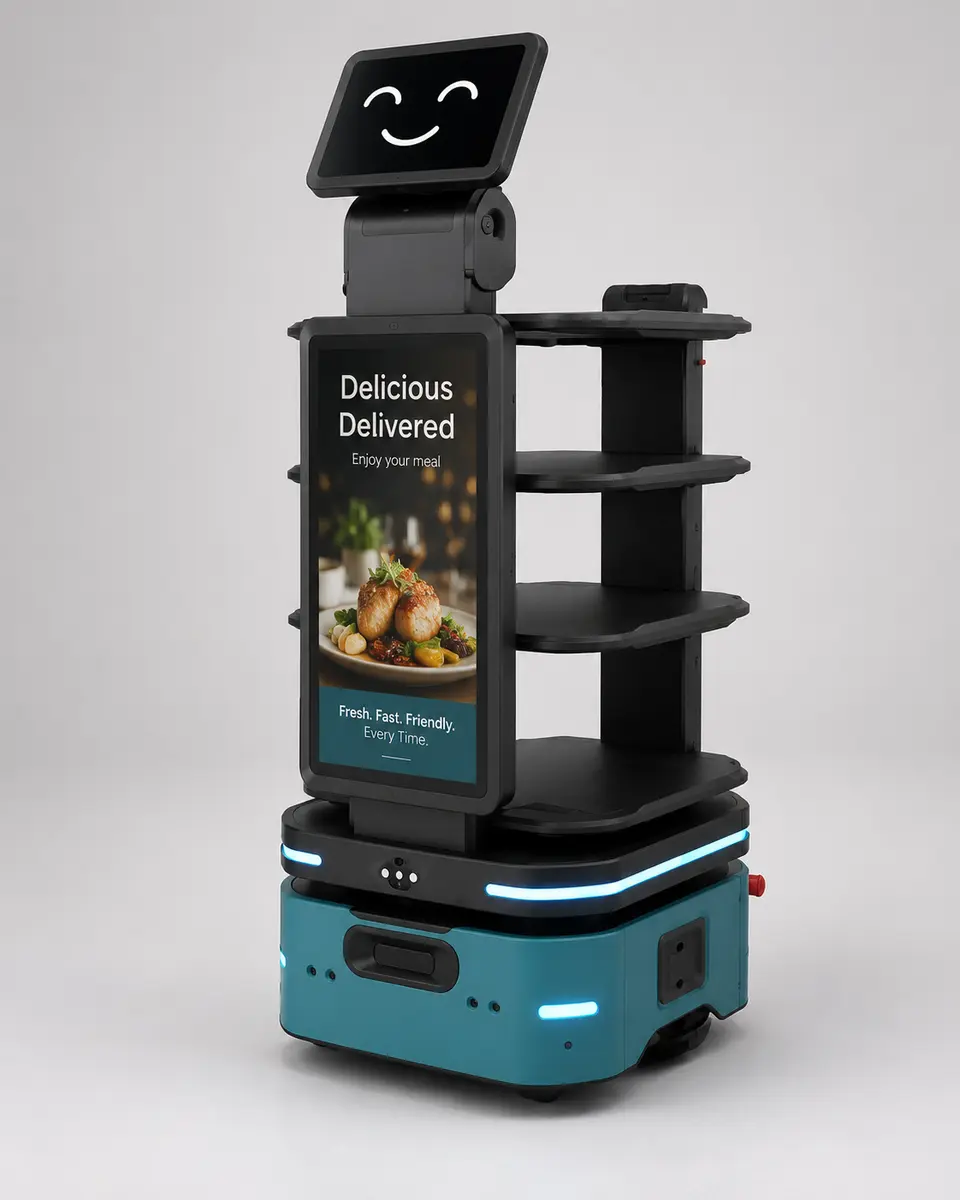
Frequently asked questions
What can a restaurant service robot carry?
The allowable items depend on the selected robot, tray or shelf configuration, payload limits and restaurant-approved handling procedure.
Can it return dishes?
Selected dish-return workflows can be evaluated where route, stability and collection-point conditions are suitable.
Can it work in a corporate canteen?
Yes, structured canteen and cafeteria environments can be good candidates for repeatable food-service movement.