How to Deploy and Commission an Office Delivery Robot
A reliable office robot deployment combines workflow definition, site review, route mapping, recipient hand-off design, building integration where required, real-condition testing, staff training and clear operating ownership.
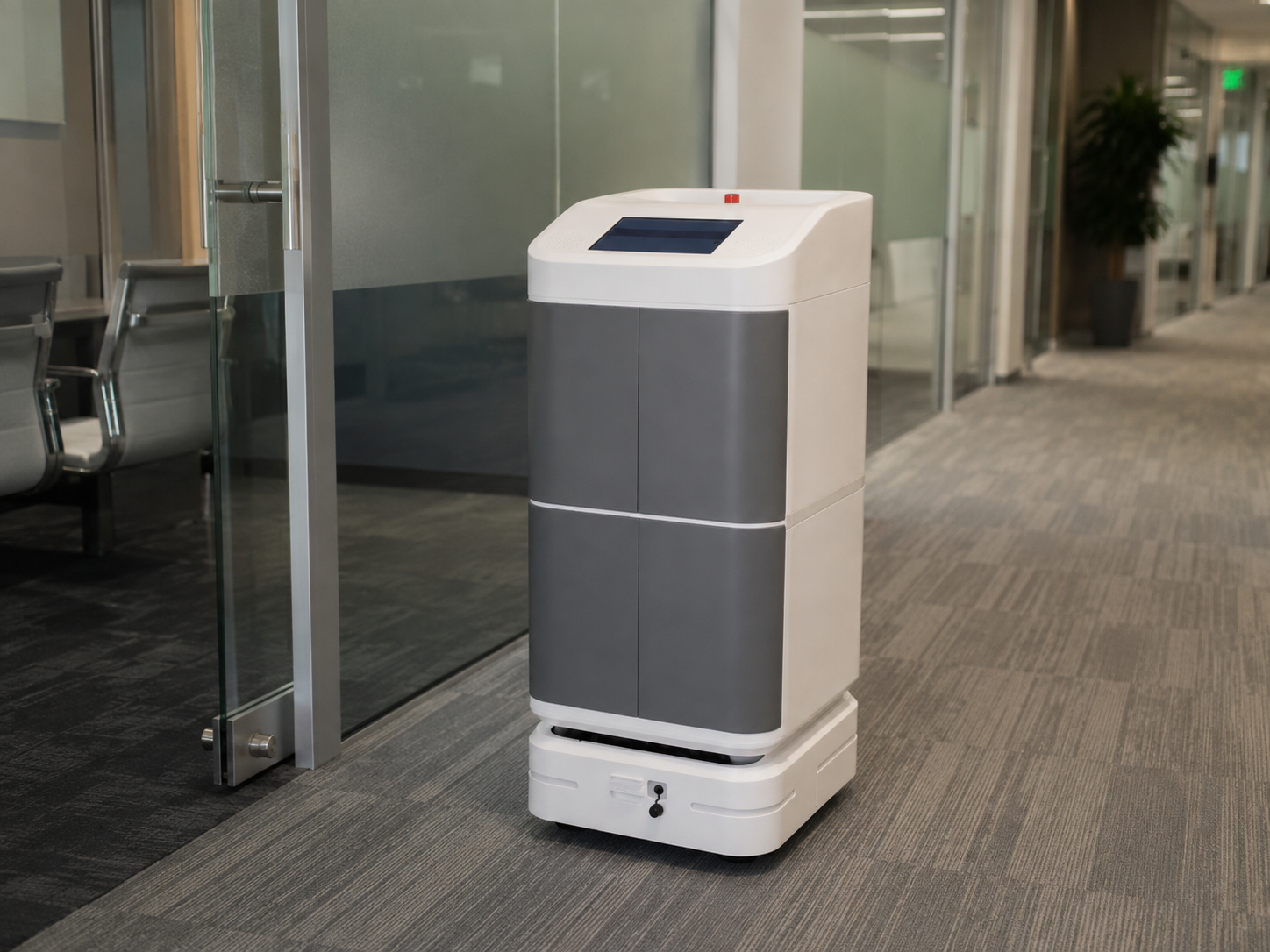
Start with the workplace logistics workflow
Document what moves, who loads it, where it goes, who receives it and what happens when a mission cannot complete.
The robot configuration should follow this operating procedure.
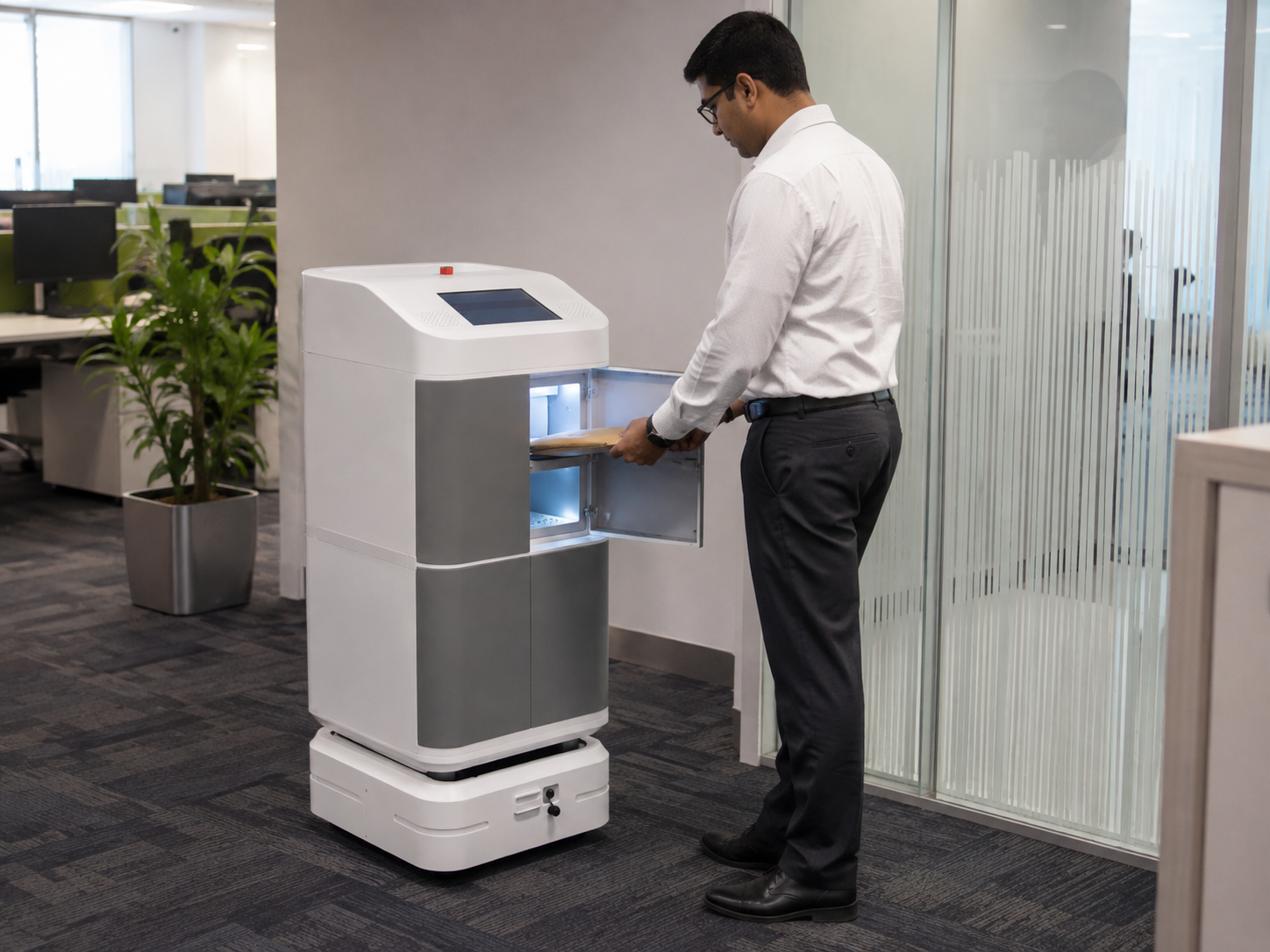
Review the actual building route
Survey corridors, doors, thresholds, lifts, controlled areas, charging and normal people traffic.
A route that works after hours may behave differently during busy office operations.
Map missions and configure approved interfaces
Create approved routes, destinations, schedules and any verified lift, door, access or notification integrations.
Each integration should have an owner, test method and fallback.
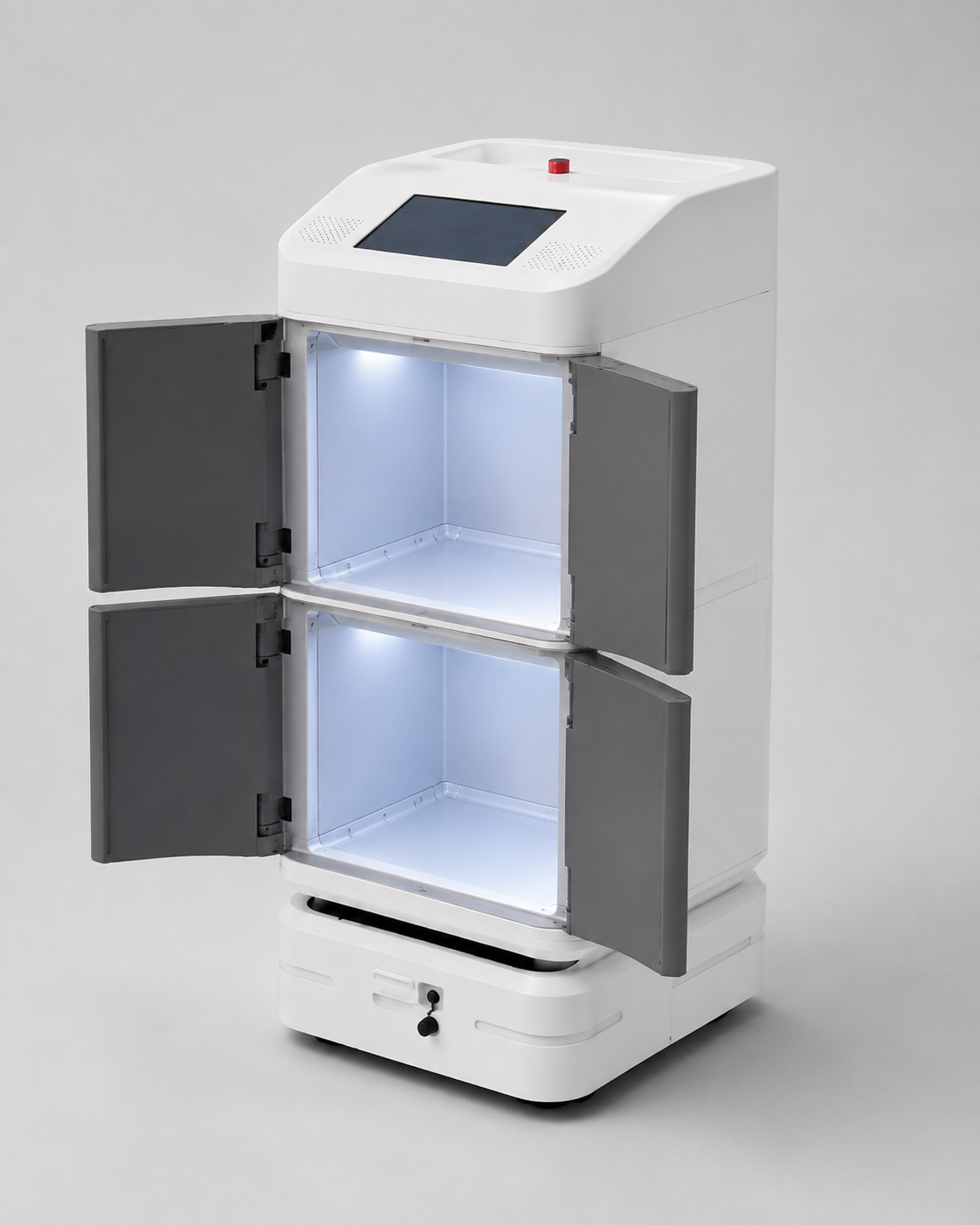
Test normal and exception journeys
Acceptance should cover loading, navigation, people traffic, destination arrival, hand-off, charging and recovery from failed missions.
The goal is to prove the complete office delivery workflow, not only autonomous driving.
Train staff and control route changes
Define daily checks, mission ownership, escalation, maintenance and how route or building changes are revalidated.
Long-term reliability depends on disciplined operating ownership.
Frequently asked questions
How long does office robot deployment take?
Timing depends on route complexity, number of floors, integrations, building approvals and acceptance requirements; it should be confirmed in the project plan.
What should acceptance testing include?
Test the complete mission including loading, route travel, lift or access steps where applicable, recipient hand-off, exceptions and return or charging.
Do office staff need training?
Yes. Relevant staff should understand loading, mission initiation, hand-off, exceptions, charging and support escalation for the selected workflow.